

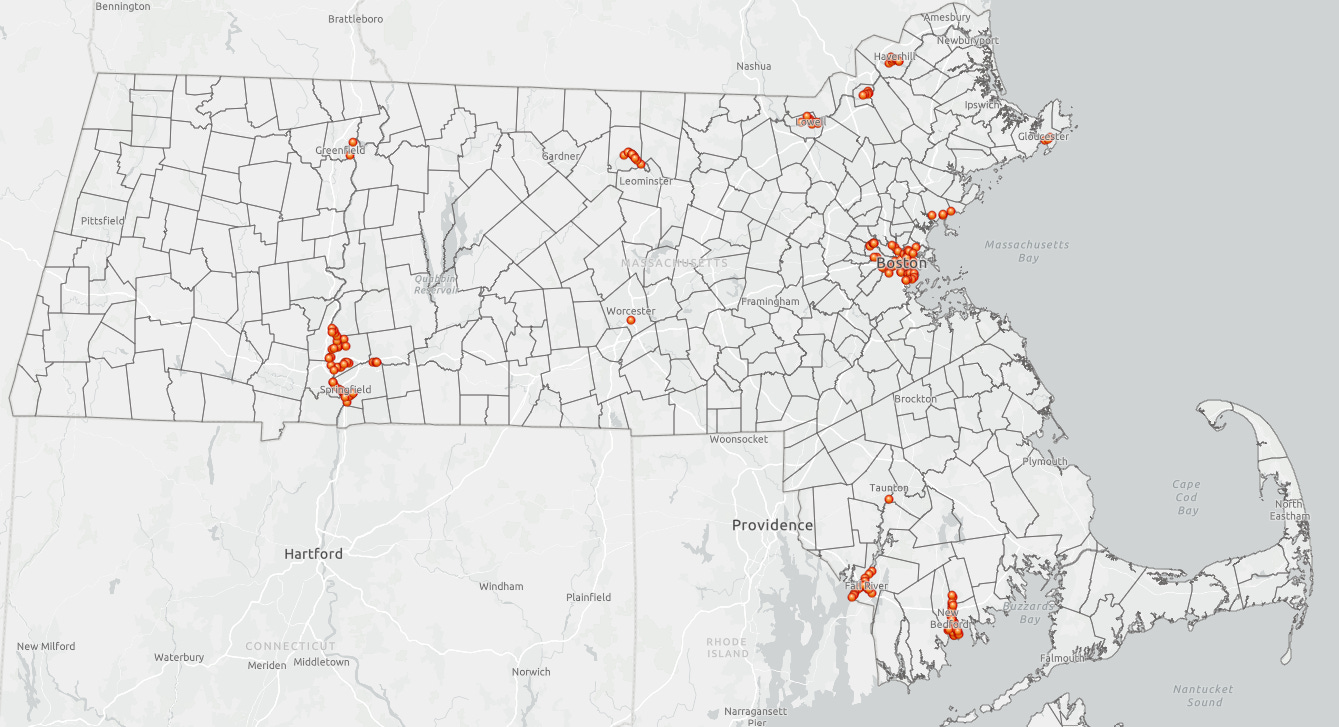
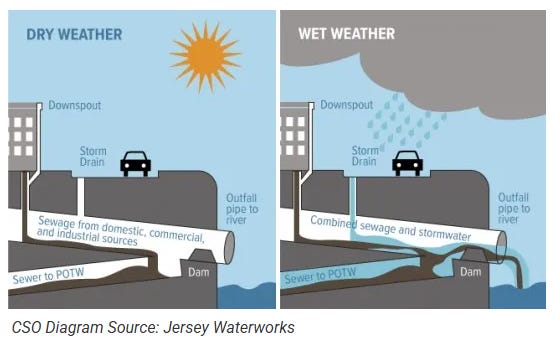
Cambridge is one of 19 communities in Massachusetts with plumbing infrastructure that dates to the 1800s. When it rains too hard, sewage waste (i.e., from toilets) overflows its pipe and mixes with storm water (i.e., from rainwater), which then ends up in local waterways like Alewife Brook and the Charles River. Here’s a map of towns with Combined Sewer Overflows (CSOs) in MA:
Here’s a handy diagram of how the pipes work:
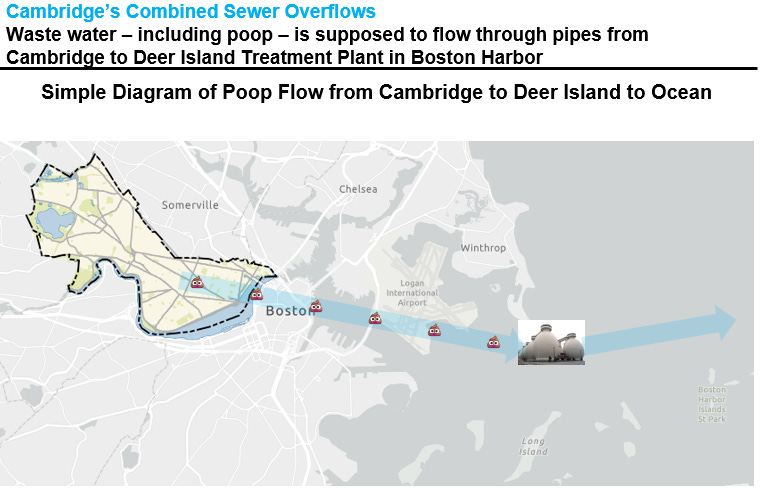
When we flush a #2, it’s supposed to go down the drain, into the waste water pipes underground, all the way to Deer Island treatment plant in Boston Harbor. After sewage is treated, it’s piped out a few miles under the ocean floor and released back to mother nature (at bacteria levels that won’t disturb the ocean ecosystem).
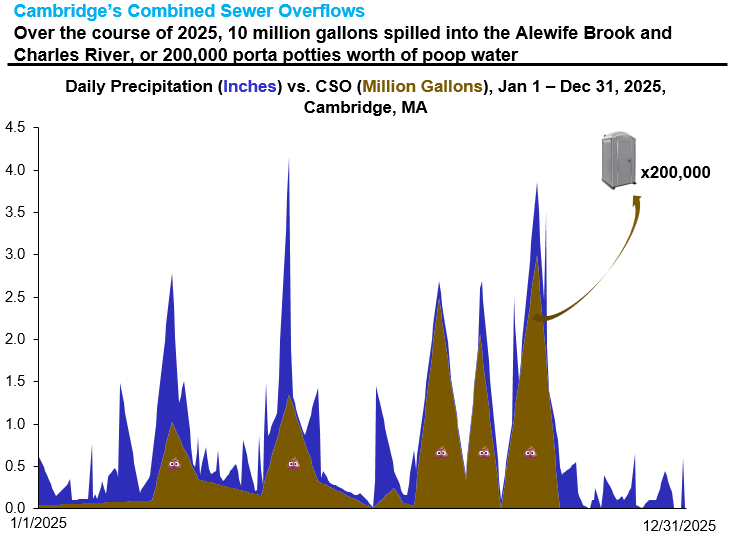
But when it rains in Cambridge, some of that overflows the pipes and makes its way into our local waterways. Of the ~400 million (M) gallons of toilet flush in 2025 (my calc), 10M ended up in the Alewife Brook (nearly 10M) and Charles River (~0.5M). This is why it smells like poop on some rainy days. This is why we can’t swim in the Charles.
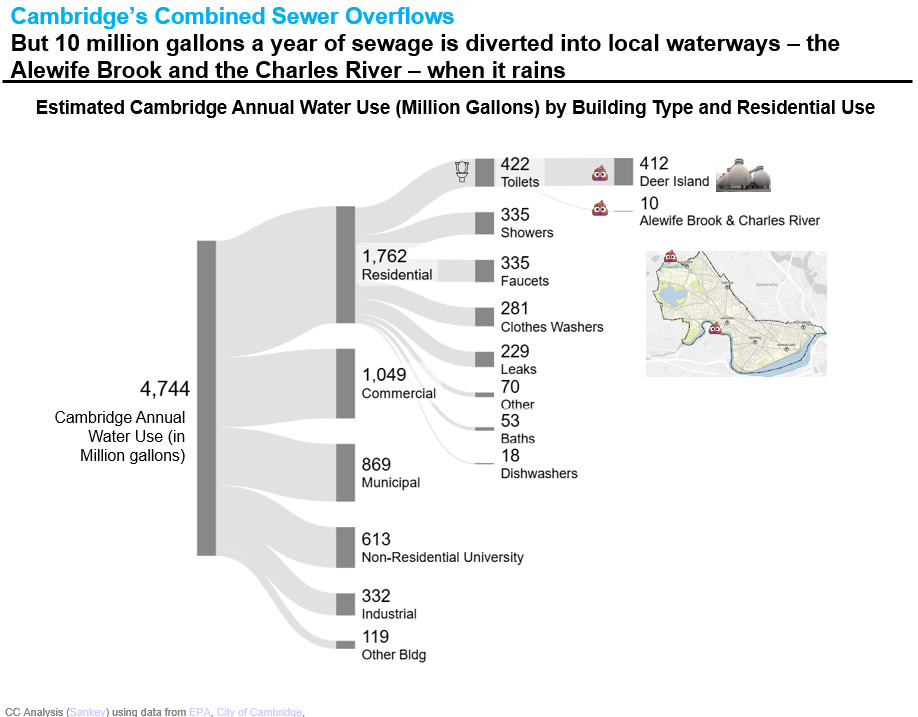
In 2025, this happened 27 times at 3 CSO sites in Cambridge (2 in Alewife Brook, 1 in the Charles River). One porta potty is 50 gallons. That’s 200,000 porta potties flooding into the Alewife Brook and Charles River annually.
This is fixable - as evidenced by recent river cleanups in Paris, Portland, and Chicago.
What can a Cantabridgian do about it? Flush less? Well, that would help with our drought status (Level 3 - Critical Drought - a topic for a future post), as toilets are the biggest residential water user, but let’s all agree that’s a sacrifice too far. This is not an action we can solve from individual actions like consolidating our poops. There are collective efforts we can take to address this problem while all staying regular:
First, sign up for Cambridge CSO alerts. The city even has an alert system (email sign up). Share and spread the word about these alerts. It took me many years living in Cambridge before I understood why it smelled bad on some rainy days
Second, support the organizations fighting for a solution: Save Alewife Brook (https://savethealewifebrook.org/) and CRWA (https://www.crwa.org/cutthecrap).
Third, since this is a regional issue, we need to work together with Boston and Somerville. To that end, you can follow the proposals put forth by a joint Joint Somerville, Cambridge, and MWRA committee. In June, they released a plan to fix CSOs ...by 2050...for most storms. Advocates are pushing for a more aggressive plan to fix the problem for all storms except extraordinary once-in-25-year rains, or better, completely separating the piping to eliminate the issue completely. The plans are costly, and disruptive (ripping-up-streets disruptive). Attend a meeting to learn more, make a comment if you have experience or valuable perspective to share. CRWA has a pre-written message you can easily send to Governor Healey in support of more aggressive solutions
There are other ways to help - rain gardens and restored wetlands, which not only slow down runoff, but help filter it; permeable pavement; planting urban trees. Let’s work together to, as CRWA says, cut the crap in Cambridge.